Every year, thousands of American golfers make the pilgrimage across the Atlantic to play the courses where the game was invented. And almost every one of them gets a surprise or two in the first round: the bunkers are deeper, the carts are missing, someone just called their pushcart a trolley, and apparently nobody knows what a scramble is but everyone is playing something called Stableford.
This guide covers what is genuinely different about golf in the UK and Ireland, so your first tee shot at a famous links is exciting for the right reasons.
Links golf is a different sport (almost)
Most of the courses on an American bucket list are links: sandy coastal ground, firm turf, wind as a permanent playing partner, and almost no trees. What that means for your game:
- The ball runs. A lot. Landing a ball 30 yards short of a green and watching it release up is not a mistake, it is the shot. Your 150 club might go 190 downwind and 120 into it.
- The ground game beats the air game. The bump and run through an open green entrance will save you more shots than any wedge. High spinning approaches get eaten by wind.
- Pot bunkers are hazards, not photo opportunities. Sometimes the correct play is out sideways or even backwards. Take your medicine.
- The rough and the gorse keep the ball. If your ball goes into a gorse bush, wave it goodbye. Bring more golf balls than you think dignity requires.
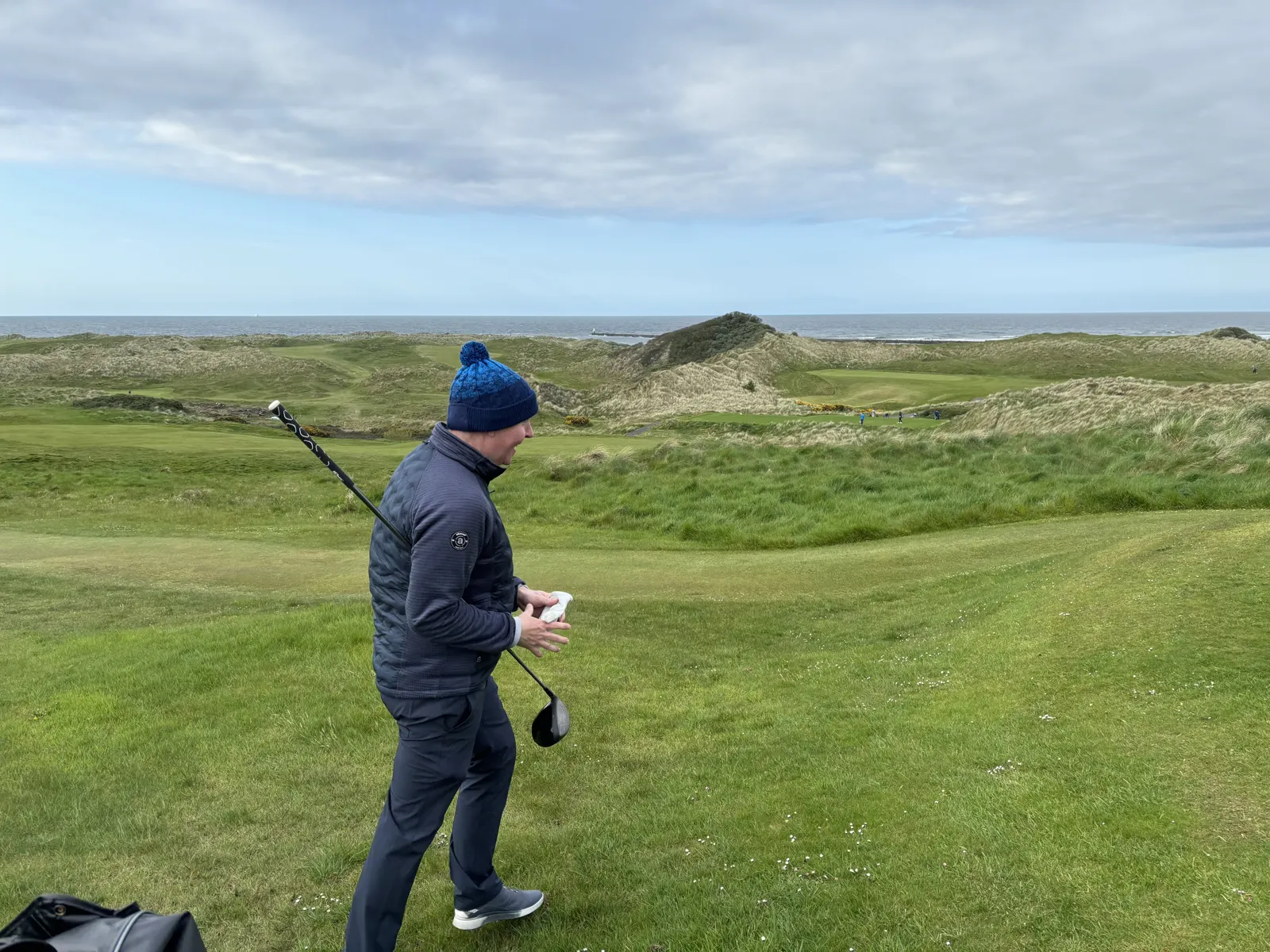
- Weather is part of the course. Irish golf lets you set off wearing sun cream, get soaked to the skin by the turn, and play the last few holes in a woolly hat. Four seasons in a single round is not a figure of speech here, it is a packing instruction. And play continues in rain that would clear an American course, partly because there are no carts to sound the horn for.
Walking, trolleys and caddies
The default in the UK and Ireland is walking. Golf carts, called buggies here, are scarce at links courses and often restricted to players with medical certificates.
- Trolleys (pushcarts) are available at almost every course, and electric trolleys are common. Nobody thinks less of you for using one.
- Caddies are available at the famous courses and worth every penny at least once. A good links caddie reads wind, ground and greens you cannot, and doubles as historian and comedian. Book ahead in summer, budget roughly 60 to 100 pounds plus tip depending on the course, and check current rates when booking.
- Carry or trolley the rest of the time. A lightweight carry bag with a double strap is the smart pack for a links trip. Your tour-sized staff bag will make the caddiemaster smile, and not in a good way.
Do you need a handicap certificate?
Sometimes, yes, and this catches Americans out. Some of the most famous links require proof of handicap, often with a maximum limit, before you can book or play. Others ask for nothing at all. The practical advice:
- Bring evidence of your USGA Handicap Index (the GHIN app screenshot is usually accepted, but a printed certificate is safest)
- Check each course's current requirements when you book, because policies differ and change
- If you do not hold an official handicap, sort one out well before the trip
Booking culture: it is not a resort
Outside of the purpose-built resorts, most famous UK and Irish courses are private members' clubs that welcome visitors at set times. That comes with quirks:
- Visitor tee times are limited, often to specific days or windows, and the biggest names book out a year or more ahead. Some operate ballots.
- Some traditional clubs restrict how many balls are in play. At a handful of old-school clubs the preferred games are singles and foursomes, the alternate-shot format where two players share one ball. Your usual four-ball, with everyone playing their own ball, may be limited to certain times or not offered to visitors at all. Check the club's policy before you book.
- Singles are welcome. Turning up alone and being paired with members is normal and one of the great joys of golf here. Some of your best trip memories may be the strangers you get drawn with.
- Green fees at the famous courses are serious money, but here is the secret Americans miss: the course next door is often world class at a fraction of the price. Every famous links has brilliant, affordable neighbours.
Take our home patch in Northern Ireland. Everyone crosses the world for Royal County Down, and rightly so. But half an hour down the coast sits Ardglass, a clifftop links where the first tee shot is played over the rocks of the Irish Sea and the clubhouse is a castle dating from around 1405, reputedly haunted in certain sections, with a fair claim to being the oldest in golf. Where else does your pre-round coffee come with six centuries of history and a resident ghost? We played it a few weeks ago on a rare cloudless day: caddies in their bibs around the green, the sea flat calm behind the flag, and pints of Guinness set down on the putting surface while the putts were read. The green fee is a fraction of its famous neighbour's, and nobody goes home feeling they played the lesser course.
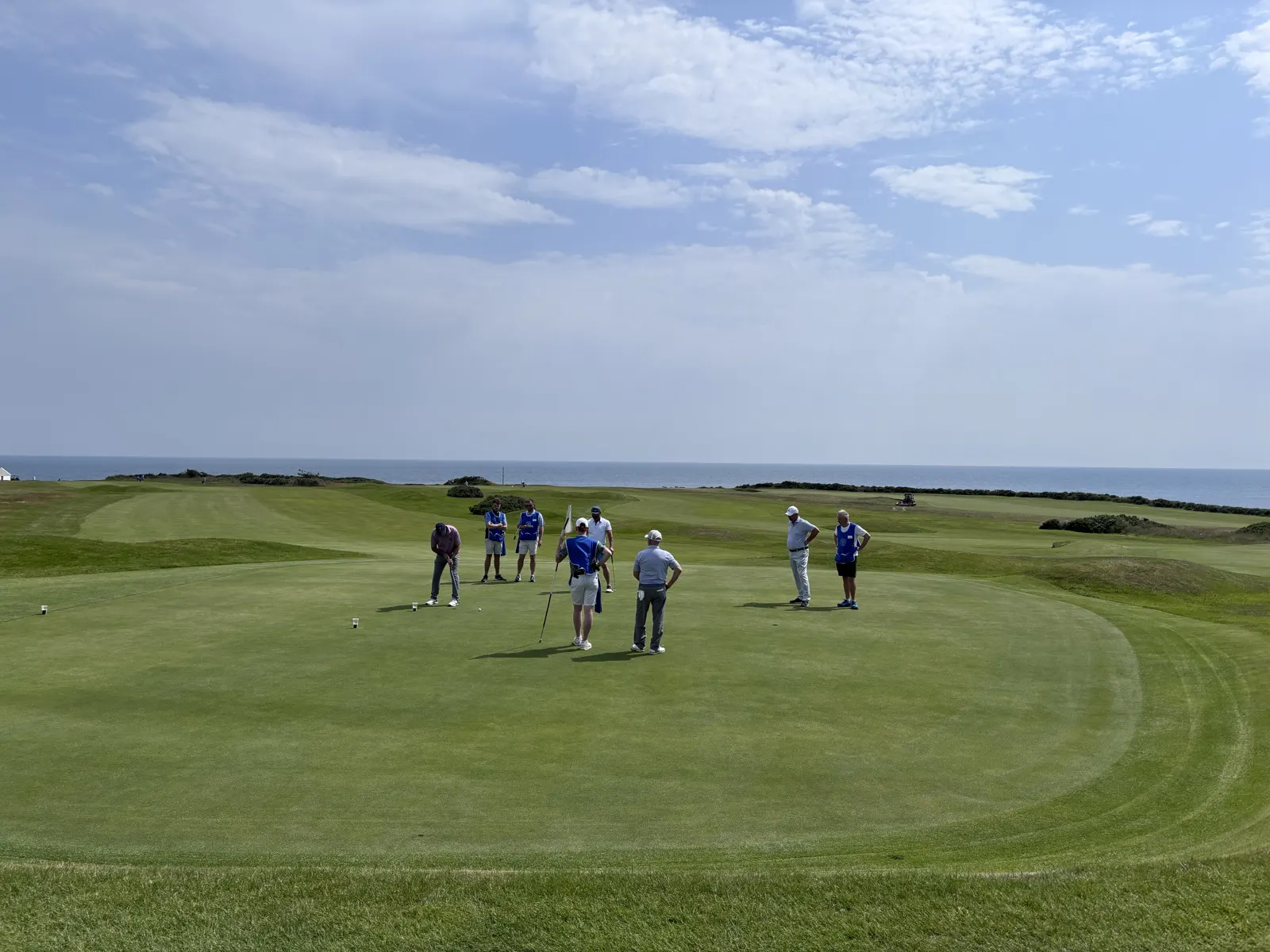
The same trick works on the north coast. If Royal Portrush is on your itinerary, and it should be, Castlerock is just along the Causeway Coast: proper links golf through serious dunes, the sea beyond, and a fraction of the fuss. It pairs perfectly with a Portrush trip, and its halfway house sits, with suspicious orthodoxy, after the 9th, proving the arithmetic can be done when a club puts its mind to it.
Dress codes and clubhouse culture
Generally more traditional than the US, though relaxing every year:
- Collared shirt, tailored shorts or trousers on the course almost everywhere. Denim and cargo shorts stay in the suitcase.
- Some historic clubhouses still have jacket-and-tie dining rooms and areas where spikes or golf attire are not permitted. Signs will tell you; when in doubt, ask.
- Mobile phones are restricted in some clubhouses. Take the calls in the car park.
- The 19th hole is sacred. Win or lose, you have a drink with your playing partners, and the visitor traditionally offers the first round if members have hosted you.
Pace of play and etiquette differences
- Rounds are faster. Three and a half hours for a four-ball is normal, under three for a two-ball. Walking, ready golf and picking up when out of a hole (see Stableford below) all help.
- Let faster groups through. Standard practice, done without drama.
- Gimmies exist in match play only. In any card-and-pencil competition, everything is holed out, unless the format says otherwise.
- Divots and pitch marks: same rules as home, taken slightly more seriously by the greenkeeper watching from the dunes.
The formats will be new to you
America plays strokeplay and scrambles. The UK and Ireland run on Stableford, a points format where a terrible hole costs you nothing more than a zero and you pick up and move on. It is faster, friendlier to high handicaps, and it will be the format if you join an open competition or a society day. Read our full Stableford scoring guide before you travel; it takes five minutes and you will not be the confused visitor asking what a blob is.
You will also meet fourball betterball, greensomes and foursomes, and if you fall in with a golf society, an entire parallel universe of side games. Speaking of which:
What is a golf society?
One cultural export worth taking home. A golf society is a group of golfers, often workmates or friends of a pub or club, who organise regular competitive golf at different courses without belonging to one club. Societies run their own handicaps, competitions and annual tours. If your American buddies trip has a name, a trophy and an argument about handicaps, congratulations: you are already a golf society, you just did not have the word for it.
Scoring your trip
A UK or Ireland golf trip is usually several rounds across several courses with a running competition: an overall Stableford race, daily winners, maybe two teams playing each other at match play for a trophy (pick your team names early: it is half the fun).
PazGolf was built for exactly this. Everyone scores on their phones as they play, no app download, and the trip leaderboard, daily results and team match update live, whether you are at St Andrews or the brilliant unknown course next door. Set your trip up before you fly, or try a live scorecard now and see how it works.
Quick answers for first-time visitors
Can Americans just turn up and play golf in Scotland or Ireland?
At many courses, yes, subject to visitor tee times, though the famous names need booking months or years ahead. Always book the marquee courses; be spontaneous with the hidden gems.
Do UK courses use yards or meters?
The UK uses yards, the same as home. The Republic of Ireland mostly uses meters on newer cards, so check the scorecard before trusting the number.
Is there a beer cart?
No. There is something better: a halfway hut. Expect a bacon roll, a sausage roll or soup, and hot tea or coffee, and do not assume "halfway" is a promise about arithmetic. At Ardglass, in the finest Irish spirit, the halfway house arrives after the 7th hole. Budget ten minutes and take the local recommendation.
How much should you tip in UK and Irish golf?
Far less than in America, and nobody expects a percentage culture. Caddies are the exception: a tip on top of the fee is standard for good service. Bar staff and pro shop, no tip expected.
What should American golfers pack for a links trip?
Proper waterproofs (jacket and trousers, not a resort windbreaker), a warm layer even in July, a winter hat and waterproof gloves alongside the sunscreen, more golf balls than you think, and a soft spike or spikeless setup. Leave the rangefinder charged: distances still matter, even when the wind laughs at them. And one tip nobody gives visitors: a bottle of Smidge. Midges are tiny biting insects that swarm on still summer days, especially in Scotland and Ireland, and they can ruin an evening round faster than any pot bunker. Locals swear by Smidge, it repels most flies and midges, and you can enjoy your golf. You will smell like every other smart golfer on the course.
Bringing a group across?
PazGolf runs multi-round trip leaderboards, team matches and side games from any phone. See golf trips or try it live right now.